CORC® ACCELERATOR MAGNET CABLES AND WIRES
CORC® accelerator magnet cables and wires form our solution for developing the next generation of accelerator magnets operating at fields above 20 T, or at temperatures above 4.2 K.
CORC® accelerator cables and wires are being developed with support of the U.S. Department of Energy and in collaboration with Lawrence Berkeley National Laboratory, CERN, Brookhaven National Laboratory, the University of Twente and the National High Magnetic Field Laboratory.
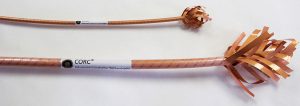
CORC® magnet cables and wires:
– Are the only isotropic REBCO-based HTS cables
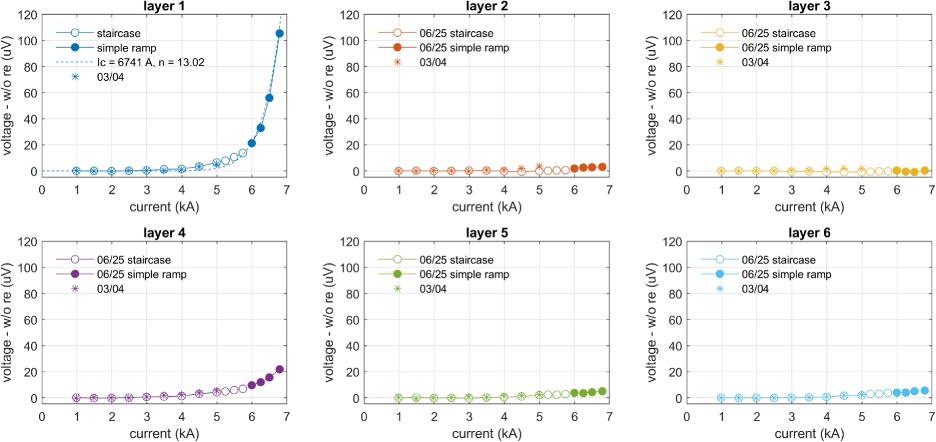
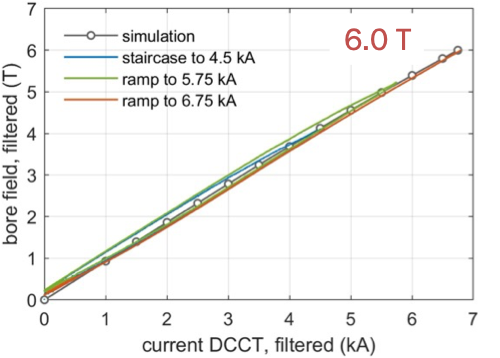
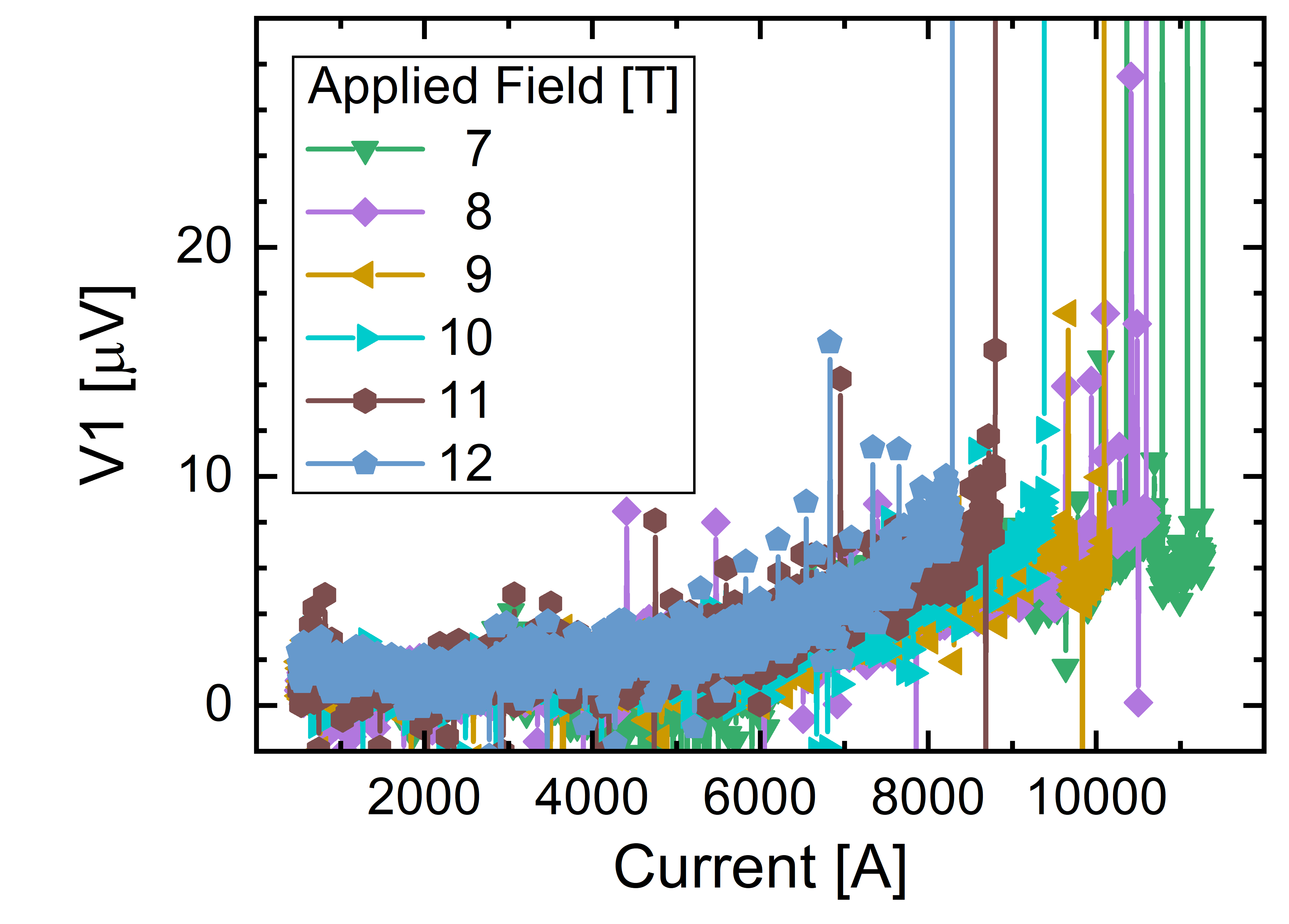
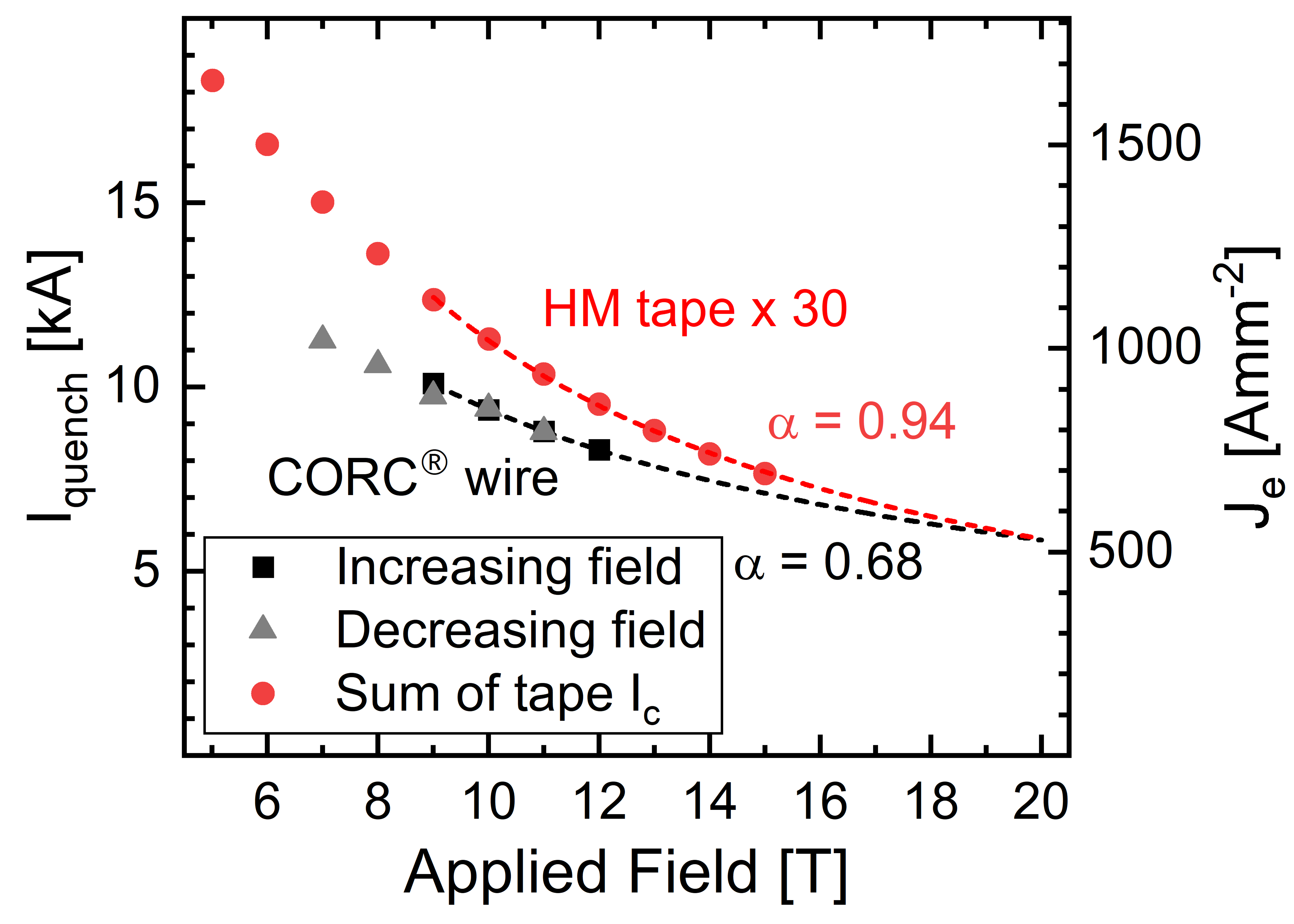
– Have demonstrated high-field performance without degradation
– Have demonstrated high current density at 20 T of 530 A/mm2
– Will soon have current densities in excess of 600 A/mm2 at 20 T
– Allow bending to less than 20 mm radius
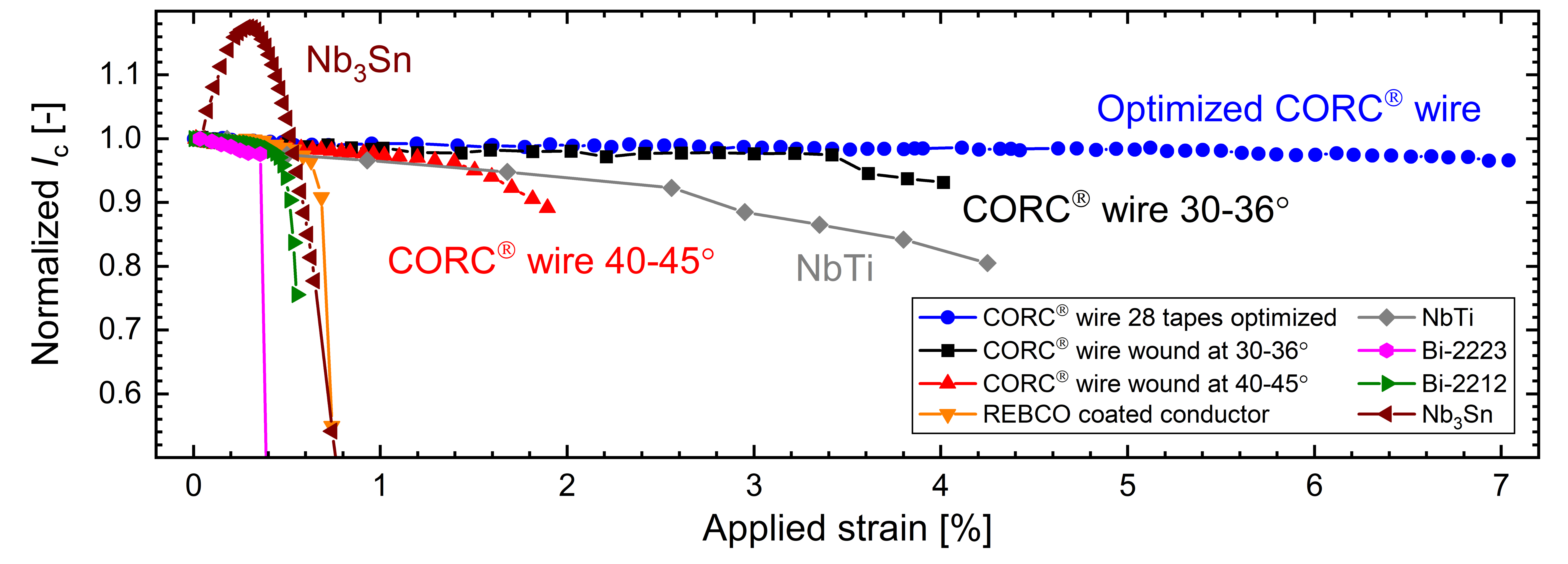
– Have demonstrated the ability to sustain over 7 % axial tensile strain, far exceeding that of any other practical superconductor
| CORC® magnet cables | CORC® magnet wires | |
|---|---|---|
| Diameter | 5 to 10 mm | 2.5 to 4.5 mm |
| Temperature, Field | 4.2 K, 20 T | 4.2 K, 20 T |
| Current | up to 35,000 A | up to 10,000 A |
| Current Density | up to 500 A/mm2 | up to 530 A/mm2 |
| Bending Radius | 40 - 100 mm | 20 mm |
CORC® accelerator magnet cables and wires are currently being incorporated into:
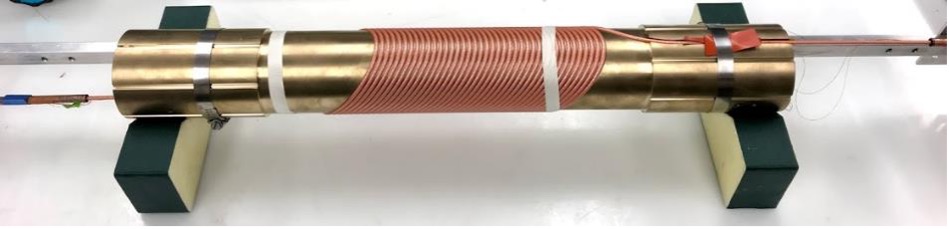
– Canted-Cosine-Theta and Uni-layer accelerator magnets at Lawrence Berkeley National Laboratory
– COM dipole magnets at Fermi National Laboratory
– Common Coil dipole magnets at Brookhaven National Laboratory